Dr. James Miles
University of Alberta
Dr. James Miles is an Assistant Professor of Social Studies Education at the University of Alberta. He began his career as a teacher in British Columbia, where he taught for 10 years. After completing his PhD at OISE, Dr. Miles joined Teachers College, Columbia University as a Visiting Assistant Professor. He primarily teaches elementary social studies methods courses with a strong emphasis on working towards historical justice, truth and reconciliation.

Curriculum in Context
Dr. Miles acknowledges the difference between the curriculum he teaches his students and the curriculum he knows they will be expected to teach as they enter their careers. He shares, “The curriculum in Alberta has been shifting in the past few years and has undergone various revisions, both troubling and more troubling. That doesn’t mean there aren’t ways to make it work, but there are some definite problems.” One such issue is that expectations and learning outcomes have become centred on fact-based, knowledge outcomes, as opposed to thinking competencies that integrate knowledge and skills.
In response, his work focuses on supporting his students in making sense of the curriculum, with particular consideration to the varying levels of familiarity they have with history given their multi-disciplinary backgrounds as elementary generalists. For example, Dr. Miles prioritizes teaching how to find and utilize relevant and credible history resources. When this skill is supported with authentic instruction, Dr. Miles believes that teacher educators can prepare their students to be successful, regardless of the particular emphases of a curriculum.
From Theory to Practice: Curricular Goals in Action
Dr. Miles believes that elementary social studies can extend beyond traditional textbook-based approaches. Instead, he emphasizes developing students’ competency in historical thinking through a variety of tasks that help students learn to think like historians.
One example is his use of primary sources including historical photographs published by the Critical Thinking Consortium. These images are used to challenge students to critically examine how historical evidence can be used in the classroom. For instance, Dr. Miles uses a set of photographs of Chinese railway workers in the 1880s. When facilitating this lesson, he models a questioning approach that invites students to explore what they know and don’t know from the images as well as to consider the possible lives of Chinese workers, creating an entry point for students to engage with the process of historical thinking.
Dr. Miles highlights to teacher candidates how this process can “support younger learners, who may not yet be able to read longer documents, by engaging them in visual analysis.” This approach also focuses on drawing out students’ knowledge, understanding of significance, and critical thinking skills.
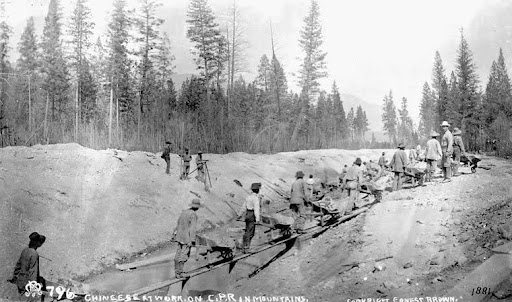
An Example Photo of a Primary Resource Educators can use in their Classroom, as discussed by Dr. Miles. Boorne & May. (1884). Chinese at work on the Canadian Pacific Railway [Photograph]. Library and Archives Canada. Public Domain. https://recherche-collection-search.bac-lac.gc.ca/eng/Home/Record?IdNumber=3194432&app=fonandcol&ecopy=c006686
He also engages his students with the concept of historical consciousness, using Truth and Reconciliation as a focal point to explore the ethical responsibilities of teaching and learning history today. Dr. Miles notes ongoing efforts to “redress and reconcile difficult histories,” while also acknowledging a rising “backlash in the form of denialism and resistance to learning Indigenous histories.” This underscores the importance of prompting students with critical, reflective questions about our collective responsibility to history, the purpose of history education, and how we might contribute to a more just and equitable life.
Navigating the Complexities of Teacher Preparation
Dr. Miles highlighted the time constraints within the teaching preparation programs. Since pre-service teachers have limited time in the classroom during practicums, Dr. Miles acknowledges the challenges of having fewer opportunities to work with the new curriculum and to apply their learning with students.
In response, he stresses the importance of building critical assessment skills for resources among aspiring teachers. He encourages future teachers to ask, “How do we evaluate them on their pedagogical value? But also whether they’re providing a wide array of voices and perspectives? Are they harmful in any way? Do they perpetrate or continue harmful racist, stereotypical, gendered views of the world? … I think being aware and cautious of those resources and spending that time really goes a long way, [it] is an important insight that all teachers hopefully can use as they go into the classroom.”
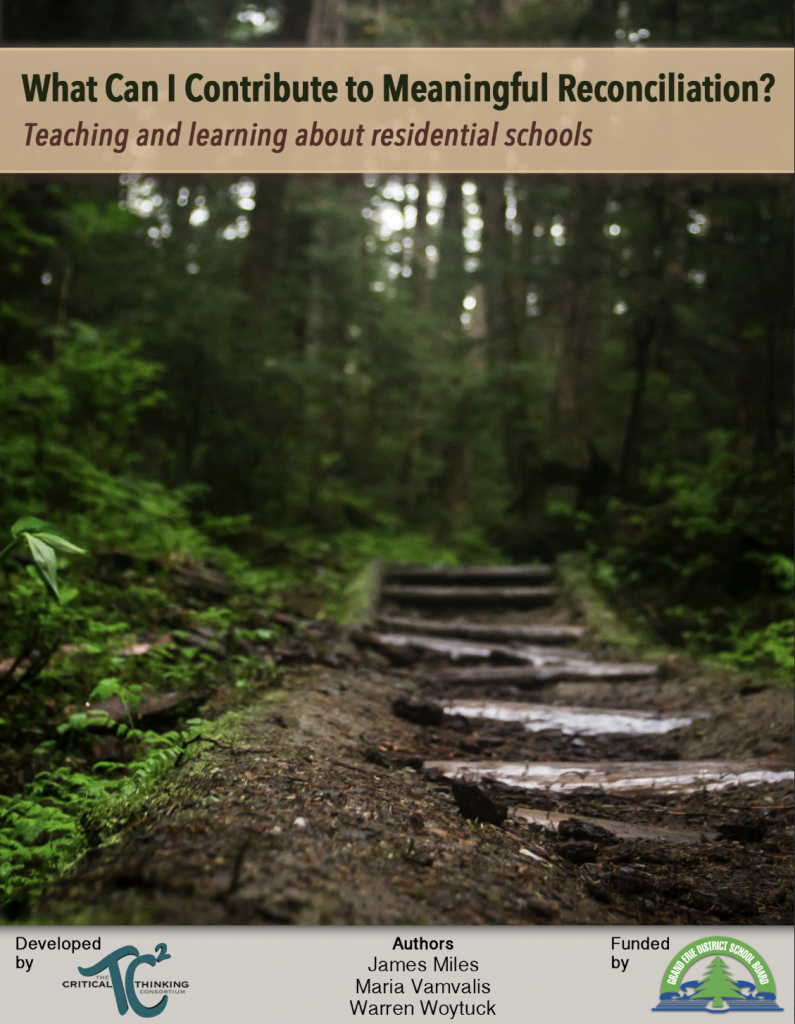
Image of What Can I Contribute to Meaningful Reconciliation? Teaching and Learning about Residential Schools Written by Dr. James Miles, Maria Vamvalis, and Warren Woytuck.
Dr. Miles also emphasizes the importance of building a strong teacher toolkit and acknowledges that the lack of resources tailored to the new Alberta curriculum requires adjusting existing resources to fit the new learning outcomes.
One example of his contribution to this effort is a resource titled What Can I Contribute to Meaningful Reconciliation? Teaching and Learning about Residential Schools. Designed for grade 6 and up, the resource presents three major guiding questions that educators can use to support student thinking and learning: “What should we all know about residential schools? … What should we all do about this, [or] what are the calls to action we might think about? [and] What might be my role in that process?”
Co-created by Dr. James Miles and Tracy Dinh