Dr. Penney Clark
University of British Columbia
Dr. Penney Clark, a Professor in the Department of Curriculum and Pedagogy in the Faculty of Education at UBC, is an expert in curriculum history and the politics of textbook development. Drawing on extensive experience teaching social studies methodology courses at universities in B.C. and Alberta, she has developed widely used teaching materials in history and social studies, including textbooks used in history and social studies methodology courses across the country.

Curriculum in Context
Dr. Clark’s current work with pre-service teachers focuses on the B.C. curriculum, but she prepares her teacher candidates for broader engagement with educational frameworks. She emphasizes Václab Havel’s perspective that the goal when engaging with the curriculum is to “develop the individual abilities of students in a purposeful way, and to send out into life thoughtful people capable of thinking about the wider social, historical, and philosophical implications of their specialities.”
Dr. Clark contextualizes learning in relation to B.C. ‘s aim to foster informed, engaged citizens. She believes that pre-service teachers who grasp this overarching goal can effectively design and deliver social studies programs anywhere. Furthermore, she highlights the commonalities across provincial curricula in Canada, teaching her students to analyze them through a transferable lens.
From Theory to Practice: Curricular Goals in Action
A cornerstone of Dr. Clark’s work with pre-service teachers is to demonstrate the critical need to “use a variety of primary and secondary sources to deepen and enrich history education.” This emphasis is particularly crucial given the diverse academic backgrounds of students, some of whom may lack a foundational understanding of historical thinking. She highlights that the core components of historical thinking are embedded, to varying degrees, in “almost every provincial curriculum across the country,” making it essential for social studies educators to skillfully approach diverse sources.
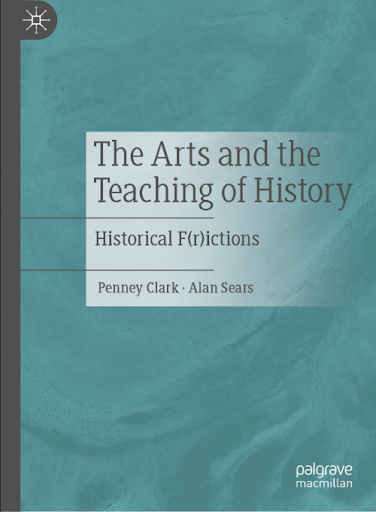
Dr. Clark values using visual arts such as paintings, and historical fiction or period pieces as entry points for teaching about the power of source diversity. She explored the possibilities of this in a 2020 publication with Dr. Alan Sears (cover pictured on right). Dr. Clark cautions that historical fiction should be used carefully because “when kids read fiction, they can get so caught up in the fiction that they forget the historical implications.” She calls this a double-edged sword. Nonetheless, Dr. Clark envisions using these engaging sources in conjunction with the historical thinking concepts because “they can get across those key ideas of historical consciousness, and that history is an interpretation.”
Importantly, Dr. Clark advocates for the thoughtful inclusion of textbooks among the sources presented to students, pushing against the perception that textbooks are “a sign of bad teaching.” She emphasizes that, when used appropriately, textbooks are “useful for providing succinct overviews, scaffolding, and a framework curated by experts.”
To illustrate the importance of using a range of sources, Dr. Clark uses a task centred on fictional and factual accounts of World War I (WWI). In this activity, she distributes a variety of sources to different student groups. Some groups receive primary sources, including war paintings by Canadian artists (see example below), photographs, letters, journal entries, newspaper accounts, and recruitment posters. Other groups are given secondary sources, like textbook sections or fictional excerpts from novels, such as a passage from L.M. Montgomery’s Rilla of Ingleside, which takes place in the Prince Edward Island homefront.
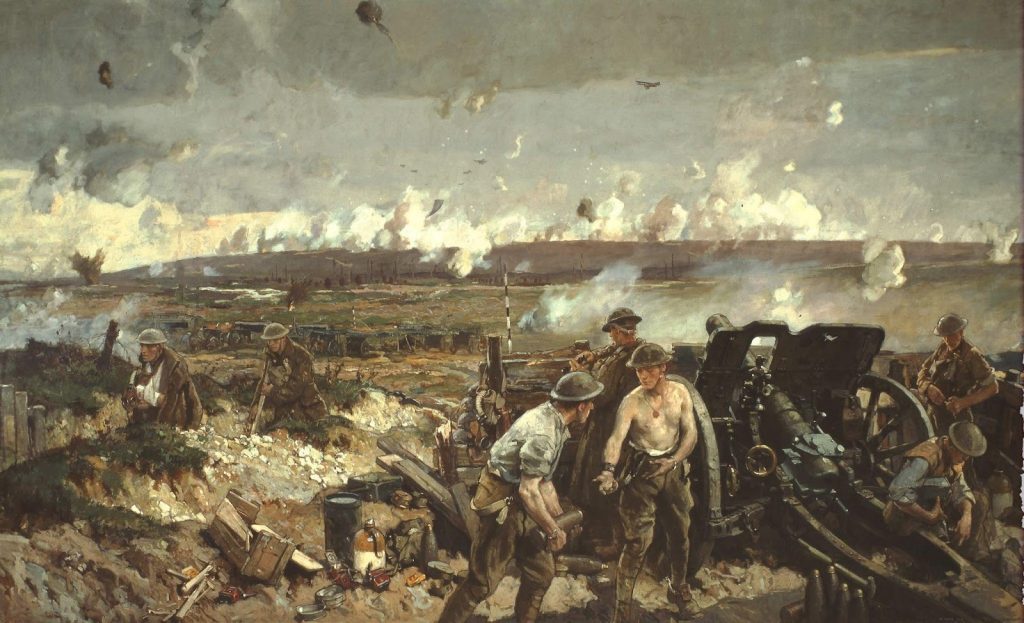
Richard Jack, The Taking of Vimy Ridge, c. 1917, painting, Canadian War Museum, Ottawa, ON. Retrieved from Canadian War Museum Collection website: https://www.warmuseum.ca/collections/artifact/1017197
After examining their assigned sources, students write a paragraph summarizing what they learned about WWI. Each group then presents their findings to the class, comparing accounts and discussing any contradictions or inaccuracies. They then consult alternative sources to confirm or refute their queries. The task culminates with students writing a comprehensive account, integrating perspectives from all sources, followed by a class debrief centred around discussion questions that focus on the affordances and limitations of each source.
Navigating the Complexities of Teacher Preparation
Dr. Clark expressed concern that social studies education isn’t prioritized in elementary schools, leaving teacher candidates with limited exposure to it during their practica. She also reflected that the current teacher education program length is insufficient, stating, “I really think it should be a longer program, because you just can’t do justice to anything.”
Dr. Clark also advocates for authorized, accessible resource lists to support history educators. B.C. is unique in that it lacks an authorized list of ministry-vetted resources, which leaves teachers to spend considerable time “reinventing the wheel” to find and develop resources. This, in turn, hinders pre-service teachers’ practicum preparation. This observation underscores Dr. Clark’s efforts to create and disseminate quality resources to foster engaging history education.
Co-created by Dr. Penney Clark and Jessica Gobran